How Delivery-Focused Firms Rebuild Department Operating Logic Before Any Agent Gets Deployed
Redesigning processes before deploying agents prevents automation from accelerating existing flaws.
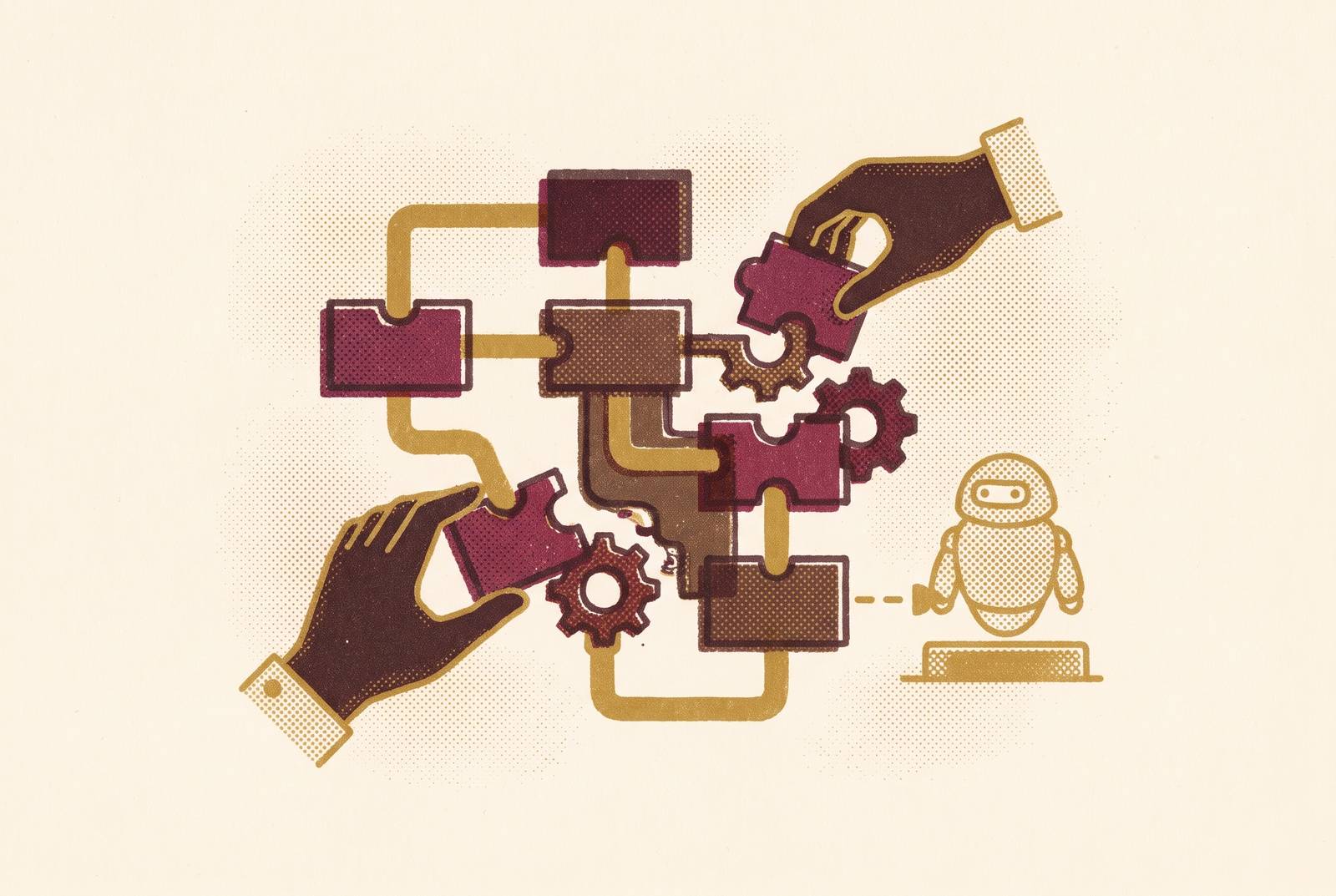
Rebuilding department workflows with AI agents starts with redesigning the decisions, information flows and responsibilities that govern delivery before selecting an agent. Delivery-focused firms must make those rules explicit before authorising agents to act, because automation accelerates the flaws in a process as readily as its useful work.
Why the pre-deployment sequence matters: agents inherit the process they land in
Paul David's 1990 paper “The Dynamo and the Computer” provides the useful parallel. Factories that plugged electric motors into steam-era layouts saw only small gains in how much they could produce. The larger gains came when factories redesigned their layouts around the new capability. Replacing the power source was not enough. The organisation of work determined what the technology could deliver.
The same distinction applies to agents in delivery departments. Automating a task speeds up its execution, but it also accelerates structural flaws in the surrounding process. Task acceleration is the first-order effect of deployment. The second-order advantage emerges when the work around that task has been rebuilt so that faster execution supports better decisions downstream.
What broken operating logic looks like in delivery-intensive departments before anyone deploys an agent
Projects can go off track while teams continue planning because they detect too late that actual execution has diverged from the timeline. Field data collection often prioritises ease of capture over a decision's requirements. The distinction has a direct delivery consequence. With 52% of all construction rework tracing to outdated or missing documents reaching the field, document flow is a process-design problem before it becomes a technology question.
Retail replenishment has a different version of the same disconnect. Demand sensing, allocation decisions and execution actions can each sit in a different system with its own schedule. An AI layer then sits between steps that are disconnected, with no joined-up replenishment process to work within. Better predictions alone cannot connect those steps. The defect lies in how information becomes a decision and how that decision becomes an action.
In manufacturing, a generic tool can summarise data or speed up reporting without taking account of a plant's equipment, workforce or operating constraints. Those constraints decide whether the output is of use. In logistics, the same problem spans organisations, because each one that handles a shipment has only part of the information needed for end-to-end optimisation. Contractual, competitive and technical barriers obstruct the unified view an agent would need. Across these sectors, the process depends on context and workarounds that are not legible to an external system.
Why informality and tribal knowledge are the hardest part of the pre-deployment audit
The written process rarely covers all the work a delivery department actually does. Informal overrides, exceptions held in a planner's head and supplier quirks known only to one buyer can determine what happens next. These are operating rules. Yet they may be absent from the documents handed to the deployment team because experienced staff have never needed to make them explicit.
An agent given only the formal map receives none of that context. It can follow the written logic while staff keep using workarounds to follow the informal rules. Two tracks then govern the same operation. This is harder to manage than either track alone because the documented sequence and the practical route to delivery no longer describe the same work.
To uncover that difference, the team rebuilding the process must watch it run and ask why people depart from it each time. Document review alone cannot reveal an unwritten exception. Each override needs to be brought into view as a clear rule or an agreed point where a person must use their judgement. This is where the audit becomes difficult, because it requires examining the decisions that allow an apparently orderly process to function.
Such work takes time while firms are under pressure to deploy to keep up with competitors, which is the strongest argument against it. Narrow, reversible deployments offer a legitimate response. Drafting RFIs, first-pass submittal review and bid analysis can provide useful entry points because their limited scope prevents informal overrides from cascading through a wider operation. But success in a bounded task establishes only that the task is suitable. It does not demonstrate that the department's broader operating logic is ready for agent execution.
How to redesign a department workflow with AI agents by mapping decisions, not just tasks
A task map records what happens and in what order. A decision map establishes what must be true for each step to work correctly, who judges whether those conditions hold and what follows if the judgement is wrong. Agents need the second kind of map.
For each decision, the map must identify the information required, where it currently lives and whether it arrives in time to influence the outcome. It must also record the constraints under which the decision is made. Authority needs an explicit boundary. An agent authorised to act on procurement decisions requires a more rigorous map than one that flags schedule anomalies for human review, because the permitted action changes the consequences of an error.
Moving maintenance from fixed schedules to predictive models changes the basis on which maintenance is initiated. Moving quality control from catching finished defects to identifying precursor process conditions changes where intervention occurs. Neither is merely a faster reporting task. Both require a prior decision about what the process is supposed to optimise, within boundaries defined by safety, quality, compliance, cybersecurity and accountability.
Suffolk/MIT's “Construction in the Age of AI” identifies six connected value domains, including design automation, offsite manufacturing, permitting, scheduling, skilled labour and subcontracting, and supply chain and procurement. Its analysis makes design data an upstream enabler of the other functions. The handoffs therefore belong in the decision map. A rebuild must specify what information moves between functions and how it supports the receiving decision before agents can act on it. Otherwise, a department can improve its own task execution without making its output usable by the next department.
Where the rebuild should start: picking the one painful process that proves the method
The first process is a strategic choice. A broad transformation roadmap spreads effort across unresolved dependencies and delays the first usable proof point. A specific, painful process offers a more bounded test of whether the organisation can expose its rules, rebuild its decisions and use the result in live work.
For an operations team choosing that starting point, four criteria define a workable candidate. It needs a specific decision bottleneck that costs the business measurably and one team clearly responsible for the outcome. The necessary data must exist, even if it is messy. Its cycle time must also be short enough for a rebuilt version to be tested in production within weeks. These criteria make the result attributable to a process change.
A process that first requires cross-functional data integration is a poor starting point because the dependency extends the timeline before the local rebuild can be evaluated. An outcome too diffuse to assess creates a similar problem. Neither provides a clear early proof point. By contrast, a completed pilot can build practical context, stronger data habits and organisational trust despite the messy data, resistance and failures that early work may encounter.
The ILO's 2026 manufacturing report treats the reorganisation of work as a precondition for reconfiguring workflows between humans and machines. The first rebuilt process makes that reorganisation observable. In construction, it can also establish structured upstream information that another function can later consume. That is how a small starting scope supports a broader ambition without requiring every department to change at once.
What the field evidence shows when firms skip the rebuild and deploy directly
The consequences of skipping the rebuild follow from the process defects already present. In construction, buying computer vision or schedule simulation before daily logs are consistent can produce alerts without a workflow for resolving them. More signal does not create a response mechanism. The organisation still needs an agreed route from an output to a decision, or the additional information remains outside the work that determines delivery.
A tool that helps one plant reduce scrap may be irrelevant or risky in another because equipment, workforce and operating constraints differ. Transfer is not automatically neutral. Without process-specific customisation, the firm has not established whether the tool's role fits the conditions under which the second plant operates.
The ILO report describes AI as redistributing tasks between humans and machines, with workers operating, supervising or adapting digital and robotic systems. That redistribution changes responsibility as well as execution. If the workflow is left unrebuilt, ownership of the outcome can remain unclear on both sides. The organisational change cannot be avoided simply by treating deployment as the addition of a tool.
In each of these settings, the agent may end up just reporting on what has already happened. People need to interpret its outputs before they can use them to make decisions about the work, so producing information and using it remain separate steps. This limits the leverage of faster execution. It also explains why a technically successful deployment can fail to improve the department's performance without any single dramatic malfunction.
The process that seemed to work before automation poses the most underestimated risk. Experienced staff may have been compensating for missing information, flawed rules or undocumented exceptions throughout its operation. Their corrections concealed the underlying defect. When an agent executes the unchanged formal process without those compensating behaviours, the failure becomes visible because the informal support has been removed.
How delivery-focused firms that rebuilt first are realising compounding returns
Rebuilding first creates reusable operating knowledge. Each completed pilot can strengthen the context, data habits and trust available to the next deployment rather than leaving learning confined to a tool or an isolated task. Access to generic AI alone does not build up that knowledge. The advantage comes from a department becoming better able to define decisions, supply their inputs and act on their outputs.
The Suffolk/MIT white paper reports efficiency gains across its six value domains and models how those gains build on one another when the domains work together. Its evidence is suggestive. When handoffs are rebuilt, design information can help with later decisions, so improvements upstream are useful beyond the function that made them.
This does not mean all of those gains have already been realised through mature agent deployments. The ILO report describes manufacturing AI as largely at the pilot stage, with uneven adoption across countries and enterprises, even as applications extend across design, quality control, logistics and supply chains. That places a limit on broad claims of transformation. It also makes preparation consequential, because firms with rebuilt processes can add capabilities without first untangling responsibilities under live operational pressure.
Successive agents then enter an architecture designed to receive them, rather than adding new outputs to unresolved workflows. The practical test is therefore broader than correct agent performance in testing. Operations leaders should look for a clear workflow that people have agreed to follow when acting on agent outputs. That workflow must be measurably faster and less error-prone than the one it replaced.