Why Delivery Departments Keep Automating Dysfunction and What Breaking That Cycle Requires
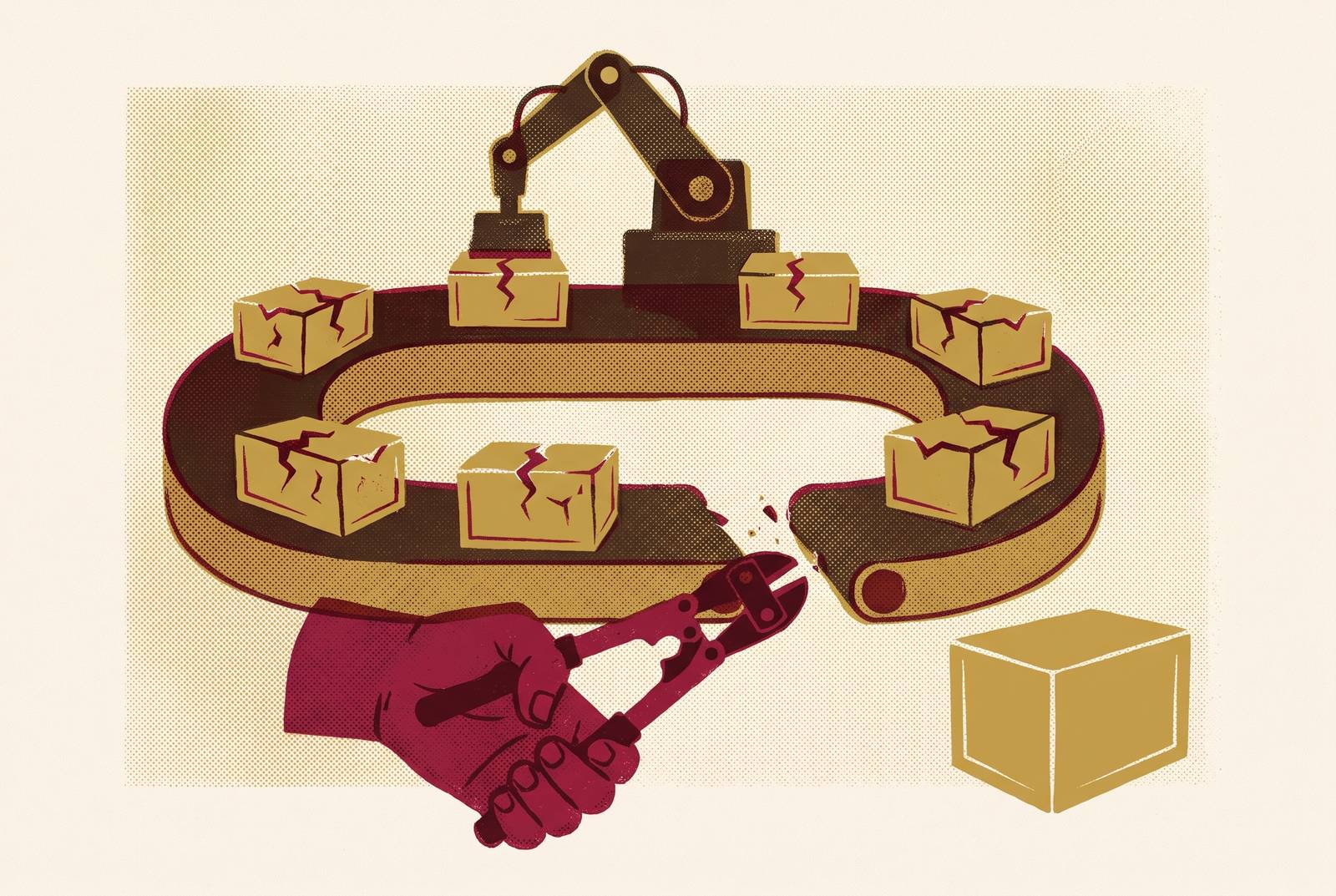
Automating a broken process only speeds up its failures.
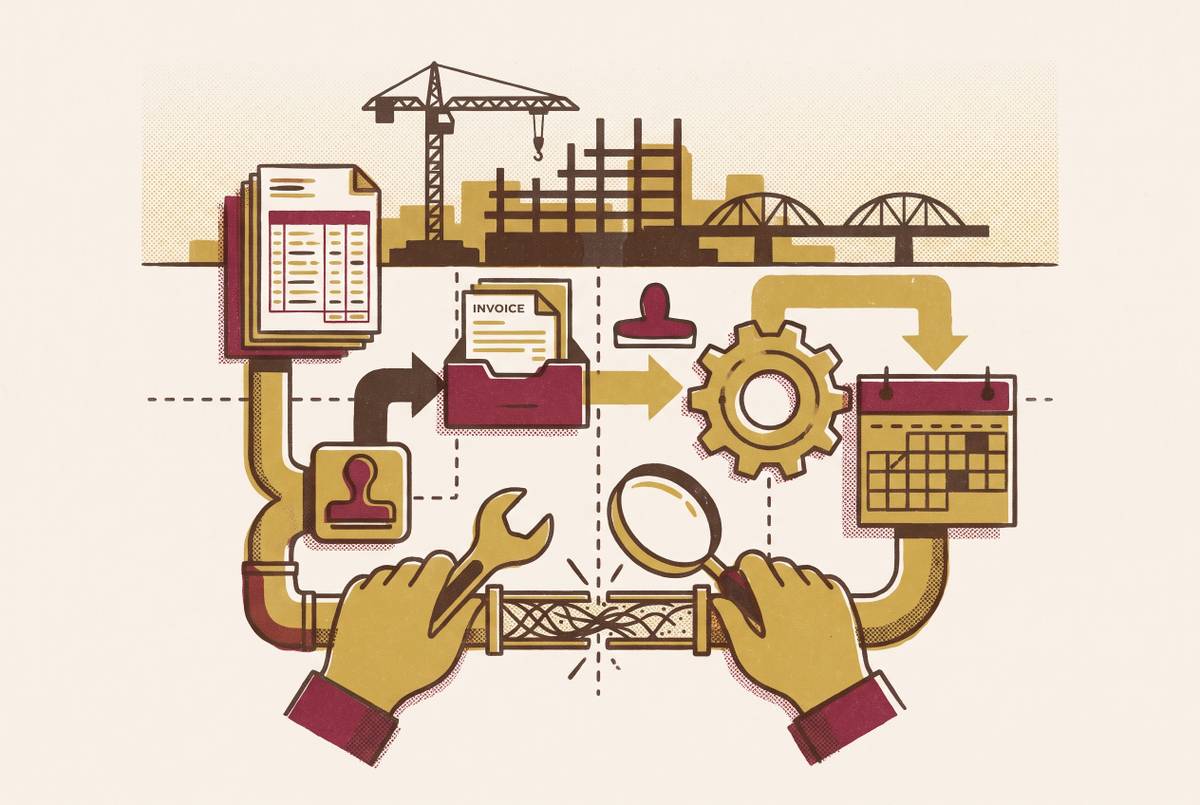
Rebuilding department workflows with AI agents from scratch requires redesigning how work, information, and decisions move before automating them. Delivery departments keep automating dysfunction because they treat broken processes as fixed and use tools to manage the resulting pain faster. The credible alternative starts with a specific operational failure, traces the process that produces it, and introduces agents only after that process has been rebuilt.
Why delivery departments automate dysfunction instead of fixing it
A slow handoff creates pressure to move information faster while leaving its purpose and unresolved issues unexamined. A costly reporting gap creates pressure to produce another report. Both responses can look like useful fixes when teams are under pressure to deliver. Yet the underlying flaw travels with the tool. When a process passes on only part of the information or leaves it unclear who owns a decision, automation makes that flawed exchange easier to repeat.
Agentic AI increases the reach of that mistake. Earlier automation followed fixed rules for a narrow set of tasks, while agentic systems interpret goals, trigger workflows, and act across systems. That lets broken flows and undefined decision logic spread beyond the task where they started. Employees may previously have corrected those weaknesses through judgment, escalation, or institutional knowledge. Once agents operate over the same foundation, those quiet corrections cannot be assumed to protect the wider workflow.
Reported progress becomes disconnected from delivered outcomes. Front-line teams continue compensating for weaknesses that the system does not resolve, even as reporting and coordination appear more efficient. Their interventions conceal the process’s dependence on human interpretation. That makes the next automation decision harder, because the documented workflow looks more complete than the process people actually run.
Why most organizations have yet to close the gap between adopting AI and getting value from it
AI is now widely used, but improvements in how organizations work have been less widespread. Organizations gaining meaningful value are substantially more likely to have redesigned their workflows first. The distinction lies in whether capable tools operate within a process whose information requirements, decisions, and responsibilities have been made explicit.
Enterprise agent deployments expose this distinction through recurring governance, transparency, coordination, and safety gaps, as well as improvement that plateaus. These weaknesses are downstream of poor process foundations. A more capable agent cannot, by itself, settle missing ownership or repair an undefined handoff.
The strongest objection is that organizations must start somewhere and that pilots reveal what needs fixing. However, a pilot built around an unchanged process tests how well automation performs that process. It does not establish whether the process is right. If a department leaves the logic behind the process unchecked, a successful pilot can teach it to handle dysfunction faster while leaving the cause in place.
How construction became the clearest sector-level example of automating dysfunction at scale
An engine optimizing such a baseline can find a path through the document without finding a workable path through the project. The input is already defective. Yet executives use those schedules to allocate resources, commit milestones to investors, and support construction loan draw requests.
The problem begins with the schedule’s operational purpose. Baselines are often created because a contract requires them, rather than because the project team intends to run the job from them. Once approved, they may never be meaningfully revisited. Contractor updates can arrive on time while doing little more than adjusting dates on paper. Contractual compliance then substitutes for a current account of how the work will proceed.
Suffolk and MIT’s white paper, Construction in the Age of AI, identifies potential value in design automation, offsite manufacturing, permitting, scheduling, skilled labor and subcontracting, and supply chain and procurement. The white paper makes redesigning those functions a condition of capturing the gains. Procurement makes the distinction concrete, because a schedule can show a resolved package while omitting a component required for installation to begin.
What the structural steel procurement failure reveals about where delivery actually breaks
The structural steel procurement failure turned on a custom clip. The procurement assumption was six weeks, but the sub-component lead time had never been captured in the system everyone was managing from. The information needed to test the schedule was absent from the record used to manage it.
Automating procurement tracking over that structure would not have exposed the missing lead time. It would have confirmed the six-week assumption faster, leaving the eventual slip more expensive to recover from. This was not a conventional scheduling failure. The information architecture excluded the detail that controlled whether the planned work could proceed.
Physical progress eventually exposes that kind of omission. Procurement or engineering figures can be adjusted while teams try to mitigate a gap, but poured concrete and installed steel show what has actually been delivered. A slip in physical progress is therefore a signal. It points upstream to preparation, information, or constraints rather than establishing that site execution caused the delay.
A model can be complete, populated with metadata, and linked to an approved schedule while the work front remains blocked. Materials may not be confirmed, constraints may remain unresolved, or the necessary information may never reach the crew. Model completeness does not establish field readiness.
How energization readiness in data center construction makes the dysfunction loop mission-critical
Data center construction exposes the same dependency failure at infrastructure scale. A site can have land control, zoning support, and tenant demand yet remain unable to energize because the electrical equipment timeline does not match the energization date. A declared completion date does not establish that alignment. The components that determine readiness can still be treated late in planning and ordered too late in procurement.
QTS announced a nearly 5 GW pipeline of projects since January 2024, with about a quarter still under construction despite commitments to come online by end of 2025. More broadly, a large share of planned U.S. data centers are expected to be delayed or canceled, while only a fraction of expected new capacity is under active construction. The constraint is not simply land, demand, or financing.
Alphabet acquired Intersect Power to secure generation capacity directly. The acquisition puts energization readiness first in procurement, ahead of downstream commissioning. It also shows how consequential that distinction has become. Readiness requires securing the conditions for operation as well as completing the building.
Work therefore starts with a confirmed grid connection date, long-leads on order, and commissioning milestones tied to energization, with practical completion treated as a separate milestone. Managing from the wrong end obscures those dependencies. As in the steel example, an apparently coherent schedule can omit the condition that makes the next stage possible, now with billions in stranded capital at risk.
Why the planning-execution gap persists even when organizations know it exists
Bent Flyvbjerg’s dataset spans more than twenty project types and over a hundred countries, yet only a small fraction of projects meet both cost and time targets. An even smaller fraction achieves cost, time, and benefits together. The pattern reaches beyond individual projects or geographies.
Denicol, Davies, and Krystallis screened thousands of titles and read 86 full papers on megaproject delivery. Their review identifies a missing understanding of megaprojects as complete production systems, extending from planning through design, manufacturing, and construction to integration and operational handover. That framing changes the unit of analysis. Each function needs to do its task, and the functions need to work together as a whole.
The Suffolk–MIT white paper identifies fragmentation and historically limited technology investment as contributors to stagnant construction productivity. Fragmentation also makes it difficult to connect planning and execution as one system. A reporting layer can describe each part without repairing the relationships between them. Faster reporting then leaves the production logic unchanged.
Near-real-time monitoring offers a legitimate counterargument because it makes field deviations visible sooner. Visibility helps teams recognize the gap. Visibility leaves the process that repeatedly creates the gap unchanged, and deviation management can become a permanent operational function without triggering change. Planning and execution need to be redesigned together.
How to rebuild a department’s workflow with AI agents instead of patching old processes
A large technology company’s revenue projection workflows involved multiple handoffs and asynchronous updates that produced erroneous forecasts. Those errors had effects on hiring, planning, and margin controls. The fix was a redesigned process with decision gates owned by cross-functional leads.
Once that foundation changed, automation that had amplified the gap began closing it. The decisive intervention was ownership of the decisions between steps. This provides a concrete sequence for rebuilding department workflows with AI agents. The team surfaces the painful process, maps how it actually runs, locates failed information transfers and undefined decision logic, and redesigns those points before introducing automation.
Manufacturing offers a useful historical parallel. Electric power did not transform factories when manufacturers just added motors to operating models built for steam. Large gains in productivity came after changes to the production system itself, including flexible layouts built around materials, people, and processes. The new capability required a different operating model. AI calls for the same kind of design work, alongside the chance to speed up existing tasks.
For a delivery department, that design work requires the people who run the process to demonstrate its live operation, including where it hurts. The documented version is not enough. Nor should redesign become a quarters-long exercise that reproduces the delay it is meant to remove. A first live process should be achievable in weeks as a real operational change, so the department must identify which painful process should be rebuilt first.
How to identify which process to rebuild first and what a credible starting point looks like
A specific process with a visible failure signal provides the strongest starting point. When physical progress keeps falling behind the schedule by the same amount, it points to flaws in upstream preparation as well as possible problems with execution. Procurement exceptions consuming a disproportionate share of team time suggest unreliable information feeding procurement decisions. Handoffs that need a person to translate between systems show where information fails to pass cleanly from one system to another.
A process audit turns those symptoms into a rebuild decision. The people doing the work show what they do, in what order, where they compensate for gaps, and what happens when a step fails. The demonstration must include the compensating work. Otherwise, the audit reproduces the documented process and misses the failure modes that employees have learned to work around.
In construction and logistics, credible candidates include procurement tracking that omits sub-component lead times, schedule updates that serve contractual compliance rather than field reality, and constraint management that exists only in someone’s head. The Suffolk–MIT white paper reports 15–40% efficiency gains from AI-enabled levers overall and identifies supply chain and procurement as one of its six value levers. Those reported gains support the opportunity, but they are not a promise for an individual procurement rebuild.
The operational test is whether the department can identify a recurring failure, demonstrate the process producing it, and specify what must change in its information flow or decision logic. That test comes before any rebuild decision. The first process should be chosen because its failure is concrete and its redesign can become live work. Automation follows as the mechanism for running the corrected process at scale.