Reading the First Invoice After AI Goes Live in a Construction Dispatch Operation
The first live invoice reveals whether dispatch automation fixed problems or just accelerated them.
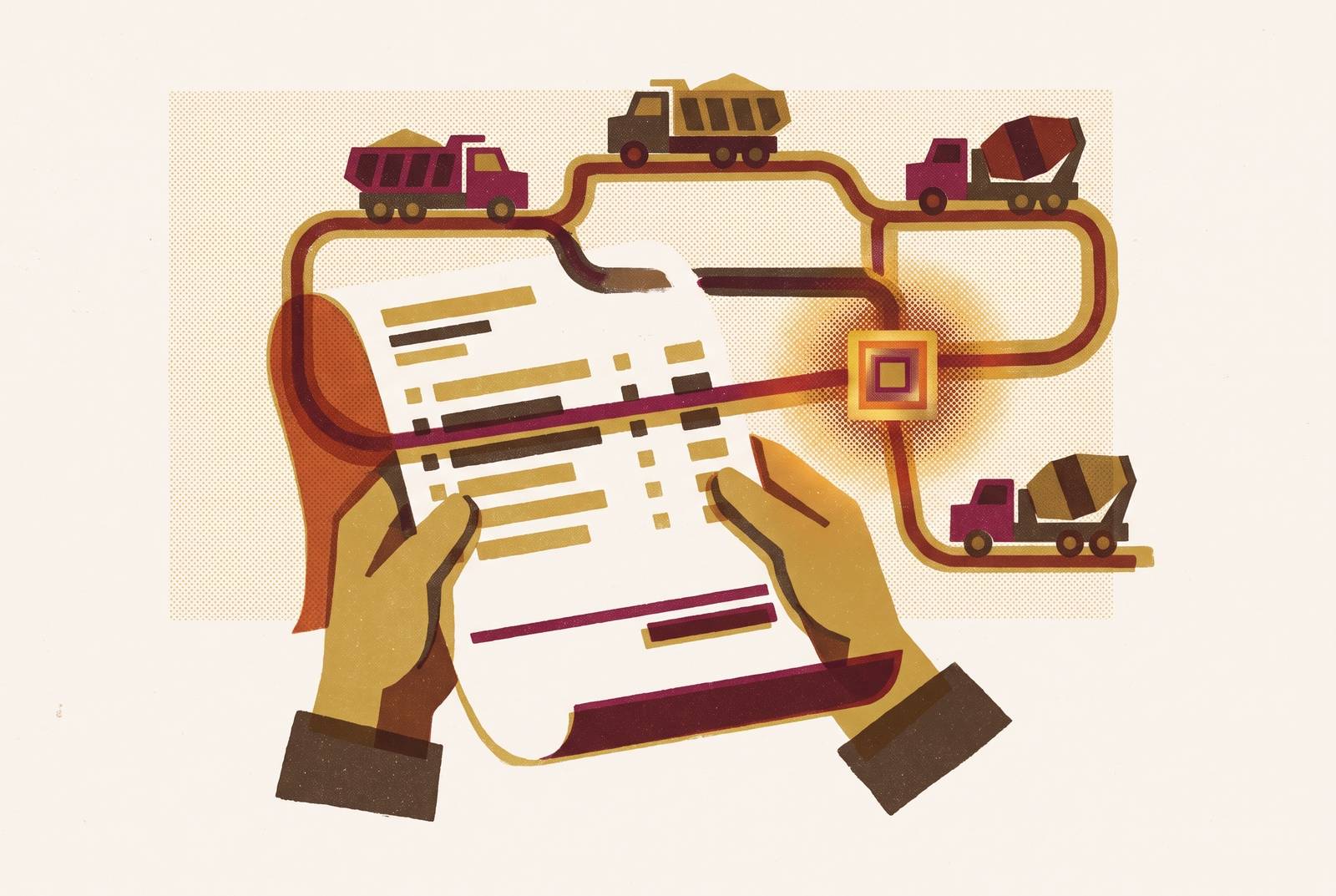
Putting AI operations to work quickly in construction and logistics needs a short live billing cycle followed by a process audit as well as payment approval. The first invoice after AI dispatch goes live is the earliest objective record of whether the rebuilt workflow holds up in production. Its line items show which exceptions can be corrected and which failures in the workflow must be fixed before volume grows.
Why the first invoice after AI dispatch goes live is a diagnostic, not a bill
An AP clerk or operations manager opens an invoice PDF the morning after the first live dispatch cycle closes. The immediate task looks familiar. The vendor, quantities, rates, and project coding need review before payment. But this invoice also records the consequences of dispatch decisions made under the new workflow. A wrong cost code may be more than an accounting error, because it can expose a classification rule applied incorrectly when the work was assigned.
That changes the purpose of the review. The invoice sits where dispatch assignments, field progress, procurement receipts, and accounts payable coding converge. Before automation, correcting a line might have been enough to release payment, but after go-live the correction leaves a second question unanswered. What upstream decision produced it? Pilots that use curated data and controlled scenarios tell only part of the story here, because the first live billing cycle runs into the disorder those scenarios left out.
How dispatch AI agents actually touch the invoice — the data path that matters
An AI dispatch agent reasons over job state, crew availability, and equipment status across systems, then writes assignments into the TMS or ERP. Those records are then used for billing and AP coding. The invoice thus reflects which crew gets an assignment, which equipment it uses, and which work order and cost code apply.
Vera V. Vishnyakova’s Context Engineering: From Prompts to Corporate Multi-Agent Architecture argues that control over an agent’s informational environment controls its behavior. In dispatch, that environment includes the data available to the agent, the information it cannot see, and its assumptions when records are missing. An accurate write to the ERP can still encode the wrong decision if the agent lacks the relevant approval or field confirmation.
The percent complete in a daily report, the Schedule of Values the client pays against, and the amounts in AP are separate numbers that are rarely synchronized. The invoice forces them into reconciliation. A material invoice without a PO number, a delivery confirmation in a superintendent’s daily log, and a project manager in the field are normal operating conditions. When the workflow cannot resolve that scattered evidence, the ambiguity reaches billing.
Three line-item patterns that signal healthy automation
The first signal is clean cost-code alignment. A line should match the Schedule of Values without AP rerouting it or a project manager reclassifying it after posting. The useful contrast is with the previous manual repair. If the agent assigns the correct code at dispatch, the invoice inherits that classification rather than requiring finance to reconstruct the assignment. An absence of reclassification notes provides evidence of clean cost-code alignment that requires corroboration.
The second signal is closed-loop work order confirmation. Field-confirmed completion should precede the invoice line, rather than arrive after AP asks whether the work happened. Sequence is the test. A line generated against a planned completion date is not equivalent to one supported by confirmation from the field.
The third signal is a traceable decision audit trail. Each line should have enough provenance to establish what was done, when, and why without a phone call. Across these patterns, approval cycle time can also be checked against the pre-AI baseline. Faster approval tells something useful only when coding, confirmation, and traceability stay intact and the work they need is done before posting.
Line items that signal edge-case failures the pilot never surfaced
Duplicate lines can arise when a vendor resends an invoice under a slightly different number, or when a project manager and the office both submit the same work order. Controlled pilot volume can conceal this overlap. The corrective control is a deduplication check at capture using vendor, amount, and invoice number before the line enters approval.
A line may charge more than the subcontract rate, bill for more than the quantities in the approved Schedule of Values, or include change order work that was never approved. Matching each line against the commitment and approved changes catches discrepancies that an apparently reasonable invoice total can hide.
Quantity mismatches expose the need for three-document matching. If a rebar PO says 8 tons, the delivery note says less, and the invoice bills 8, agreement between the PO and invoice does not establish receipt. The failure is a match that omits delivery evidence.
A missing conditional lien waiver exposes a payment-gate failure. A few closely managed transactions in a pilot may not show whether waiver tracking works at production volume. The waiver must become a hard gate in the workflow rather than a document someone intends to collect after payment.
PO-less invoices show another case that controlled pilot data can leave out. When delivery confirmation sits in a daily log, AP may lack the evidence needed to distinguish original scope from an approved change order. Pre-configured PO records in a pilot do not test that reconciliation.
These anomalies identify cases the workflow has not handled correctly. Early validation rules can also produce false positives that need tuning, so a staging success does not establish that a rule can distinguish the full range of live invoice types.
Line items that signal the broken process was automated rather than fixed
Recurrence changes the diagnosis from exception to process failure. The same coding error across different work orders indicates that the agent may be applying an inherited classification rule consistently and incorrectly. Repeated no-PO charges and systematic quantity mismatches deserve the same scrutiny. An isolated document gap may be correctable, while a repeated pattern shows that the workflow itself keeps producing incomplete or conflicting records. Faster execution then increases the rate of error production.
The job-cost report shows whether the gains still hold up after posting. Invoices may be approved sooner while project managers still change cost codes in the days that follow. That effort has been displaced. Comparing the original posted coding with those amendments exposes a handoff that remains dependent on manual repair. Approval speed alone would miss the cost of that repair because it occurs outside the measured queue.
One department may approve a variation while another continues to use the original contract value, leaving the same disagreement to recur each billing cycle. The correction requires the variation to reach all relevant systems. Vishnyakova’s analysis uses the Klarna case to describe an agent as “tactically informed but strategically blind” because of a “dual deficit, contextual and intentional.” In construction dispatch, an implicit change-order approval process creates a comparable risk of technically correct execution against the wrong instruction.
An agent can establish that a record belongs to the right project and has the correct PO number without establishing that the claimed work was physically done. If the workflow treats those document checks as sufficient, it can feed billing with unverified completion every cycle. The missing checkpoint is a design defect.
What the invoice cannot tell you, and where the human checkpoint belongs
The invoice reveals recorded process structure. A document-based system can flag inconsistencies and optimize a plan, but it cannot establish from those records alone whether site conditions make the plan executable or the claimed work complete. The human checkpoint belongs at field confirmation before the work order closes. A project manager’s judgment adds evidence that a match between project names, PO numbers, and schedules cannot supply. Scheduling adds a further limit because the dispatch agent may be working against a declared plan rather than field-grounded progress, and the invoice can inherit that gap.
How do you structure the first invoice review as a process audit, not a payment approval?
The practical response is to assign the review to someone with both operational and financial authority. AP alone can correct a classification without having the remit to change the dispatch rule that produced it. The audit must trace errors upstream. The audit finds the decision, record, or handoff that needs to be fixed, while ordinary payment review checks whether a charge can be approved.
For each line, the review should ask whether the cost code matches the Schedule of Values without reclassification. If it does not, the next question concerns the originating rule and where it acted. Work orders require a separate timing check. The reviewer should check whether field confirmation was in place before the line was created or whether billing followed a planned completion date. That distinction separates an evidence-based handoff from a workflow that still relies on assumptions.
Material quantities require the PO, delivery note, and invoice together. An invoice-only review cannot resolve what was ordered against what was received, and a missing match is a procurement workflow finding. Approval time needs similar tracing. Comparing the actual cycle with the pre-AI baseline shows whether it shortened, while locating the queue where lines wait identifies the unresolved bottleneck. A faster segment does not establish a faster end-to-end process.
Recurring anomalies need a clear escalation rule during this review. A pattern on three or more line items should be treated as a process signature and escalated as a workflow finding. The job-cost report after the invoice closes provides the accountability document. Alignment with the Schedule of Values without manual amendment supports the diagnosis that the process is working. Every amendment needs an explanation of what went wrong in the workflow, even when the accounting correction itself is easy.
What a correct first invoice signals about readiness to scale dispatch automation
A clean first invoice establishes a limited but useful result. Correct codes, field-confirmed work orders, traceable decisions, no recurring anomalies, and a shorter approval cycle show that the rebuilt process handled its first live billing cycle. They do not establish perfect performance. Readiness to scale depends on whether the remaining exceptions are tunable or whether they reproduce pre-AI workflow failures. Structural errors will persist through repetition and expand with volume.
A clean audit therefore supports staged expansion. Invoice volume should increase first, followed by work order complexity, then project count. The exception queue provides feedback on whether the process is absorbing each increase. A failed audit calls for a return to process review before adding volume. Its value is that it locates the workflow node requiring correction.
The first billing cycle should also leave room to recover if the process fails. Going live for a full monthly cycle before auditing prioritizes speed over signal, while a two-week initial cycle produces the diagnostic data with lower financial exposure. Run the process audit after that two-week cycle, resolve structural findings, and increase invoice volume only after the review supports it.